This post contains affiliate links. If you buy through them, I may earn a small commission at no extra cost to you.
A 5×7 is the size most studio renters reach for, and in a living room it’s almost always too small. It leaves a moat of bare floor around every piece of furniture, and that gap is exactly what makes a small room read smaller. The fix is counterintuitive: go bigger. A rug large enough to sit under at least the front legs of your sofa pulls the seating area into one shape, and one shape always looks roomier than five disconnected islands.
This roundup does two jobs. First it sizes the rug for you, by room and layout, so you stop guessing. Then it gives you 10 picks for a small, neutral, renter-friendly apartment: washable where it counts, low-pile so doors still clear, tonal instead of loud so the floor doesn’t fight the rest of the room. Everything here comes from one retailer, which means one sizing chart and one return process instead of five. If you’re furnishing a studio or small 1BR and want the floor handled in an afternoon, get the size right first, then choose the material.
Get the Size Right Before You Shop Anything
Rug size decides whether a small room looks pulled-together or cramped, and it’s the thing most people get wrong. Here’s the short version by space.
Small living room. The gold standard is “front legs on” — the front feet of your sofa and chairs rest on the rug, the back feet sit off it. In a studio living zone that usually means a 6×9 or an 8×10. Going full “all legs on” needs a 9×12 and rarely fits under 700 sq ft. What you want to avoid is the floating rug that touches no furniture at all; it chops the room into pieces.
Where a 5×7 actually belongs. Bedrooms, home offices, and small dens. A 5×7 covers about 35 square feet, which is fine at the foot of a bed or under a desk chair, and wrong as a living-room anchor.
Bedroom. Go 8×10 under a queen — it extends past both sides, so your feet land on rug, not cold floor, getting out of bed. Tight on space? Two runners flanking the bed do the same job for less coverage.
Multi-use dining corner. Table footprint plus about 24 inches on every side, so chairs stay on the rug when pulled out. Low pile only, or chairs snag.
Galley kitchen or hallway. A runner (2.5×8 or longer) is the only thing that looks right in a narrow strip.
Awkward corner or reading nook. Go round — a 4–6 ft rug softens a boxy corner and reads intentional where a rectangle would look shoved-in.
Quick Picks
| Rug (pick your exact product) | Best for | Approx. price |
|---|---|---|
| Washable low-pile neutral, 8×10 | Living-room anchor | around $250–400 |
| Jute-blend natural, 5×7 | Warmth + texture | around $100–160 |
| Spillproof washable, 5×7 | Kitchen-adjacent | around $150–200 |
| Washable runner, 2.5×8 | Galley / hallway | around $90 |
| Round, 4 ft | Reading nook / corner | around $130–180 |
| Wool solid low-pile, 5×8 | Soft-underfoot upgrade | around $240–350 |
| Ivory washable, bedroom 5×8 | Bright bedroom floor | around $250 |
| Textured tonal stripe, 5×8 | Interest without pattern | around $250 |
| Low-pile synthetic, 5×8 | Multi-use / dining | around $150 |
| Small accent, 2×3 | Entry / sink mat | around $30-70 |
The 10 Picks
1. A Washable Low-Pile Neutral as Your Main Anchor
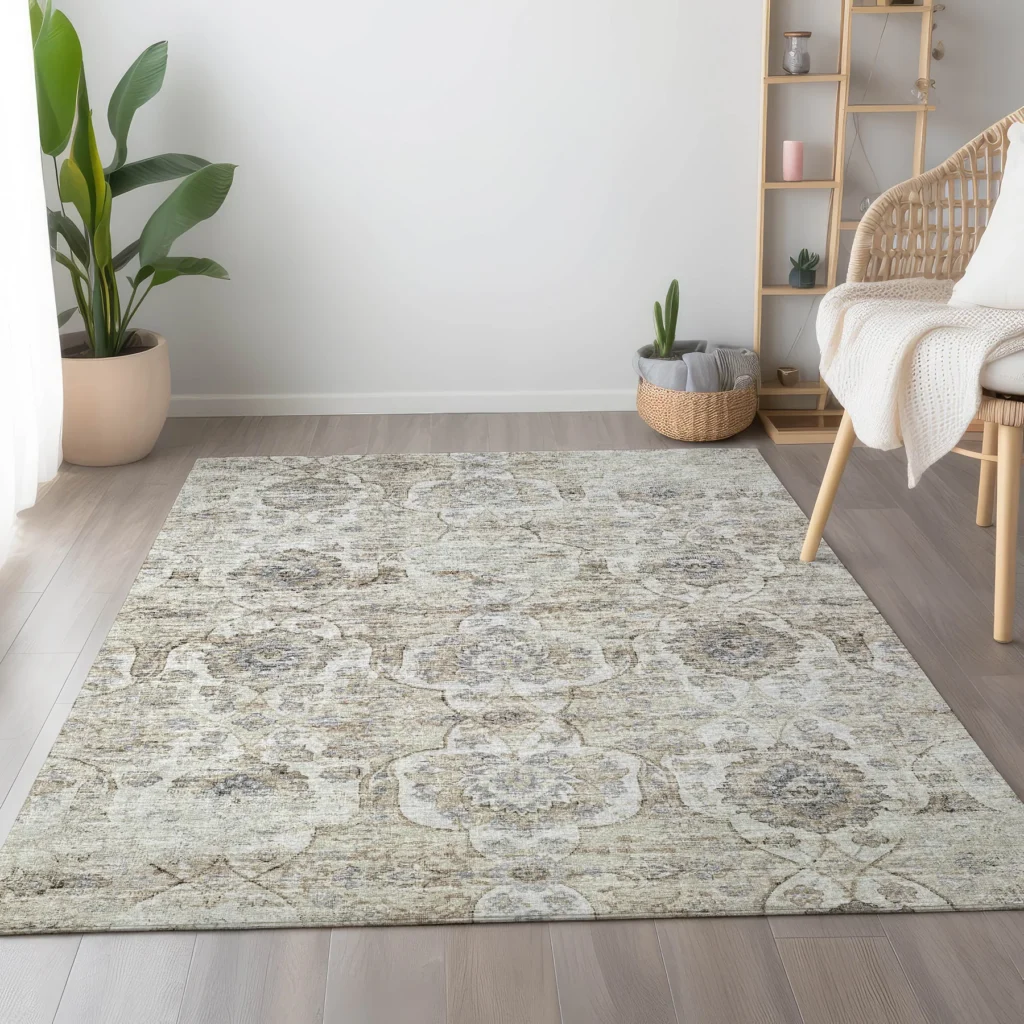
Start here if you buy nothing else. A machine-washable polyester rug in a warm greige or oatmeal, sized 8×10, is the safest anchor for a small living zone: big enough for front-legs-on, low enough that a swinging door clears it, and tossable in the machine when coffee happens. Washable neutral 8×10 — Super Area Rugs washable collection runs around $250–400 depending on size. The trade-off is feel — washable polyester isn’t as plush as wool underfoot — but for a rental with real traffic, cleanability beats softness.
2. A Jute-Blend for Texture Without Color
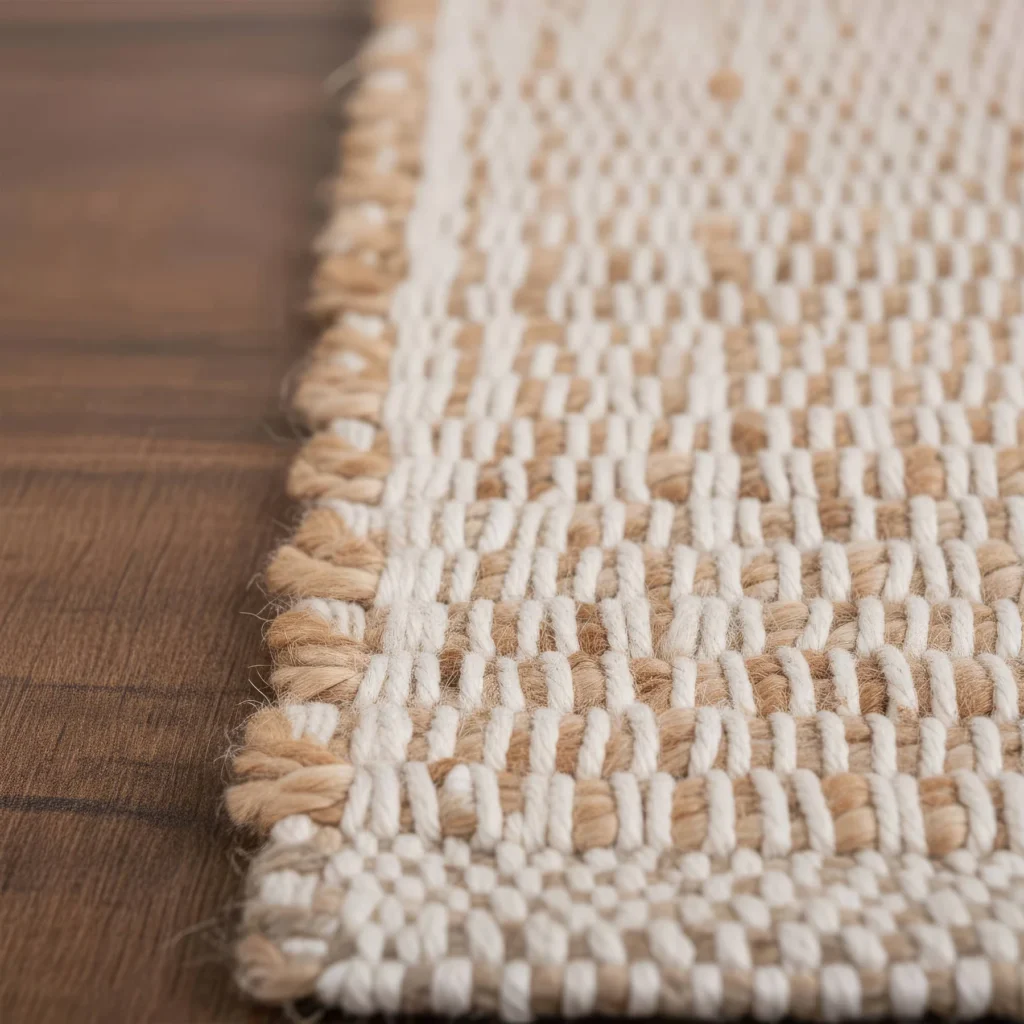
Neutral doesn’t have to mean flat. A natural jute or jute-blend rug adds a woven, sun-bleached texture that warms up a white-walled rental the way a paint color can’t. Jute-blend natural 5×7 sits around $100–160. One honest caveat: jute holds crumbs in the weave and doesn’t love moisture. Keep it out of the kitchen and away from the dining chairs, and pair it with a grippy pad — natural fibers slide.
3. A Spillproof Washable for the Kitchen Edge
Studios blur the line between kitchen and everything else, so the rug near your prep zone needs to survive splashes. A spillproof, machine-washable 5×7 in a muted pattern hides the odd drip and wipes clean between washes. Spillproof washable 5×7, around $150–200. Patterned or mid-tone versions hide traffic far better than a pale solid here, which is the one spot where “cream” is a mistake.
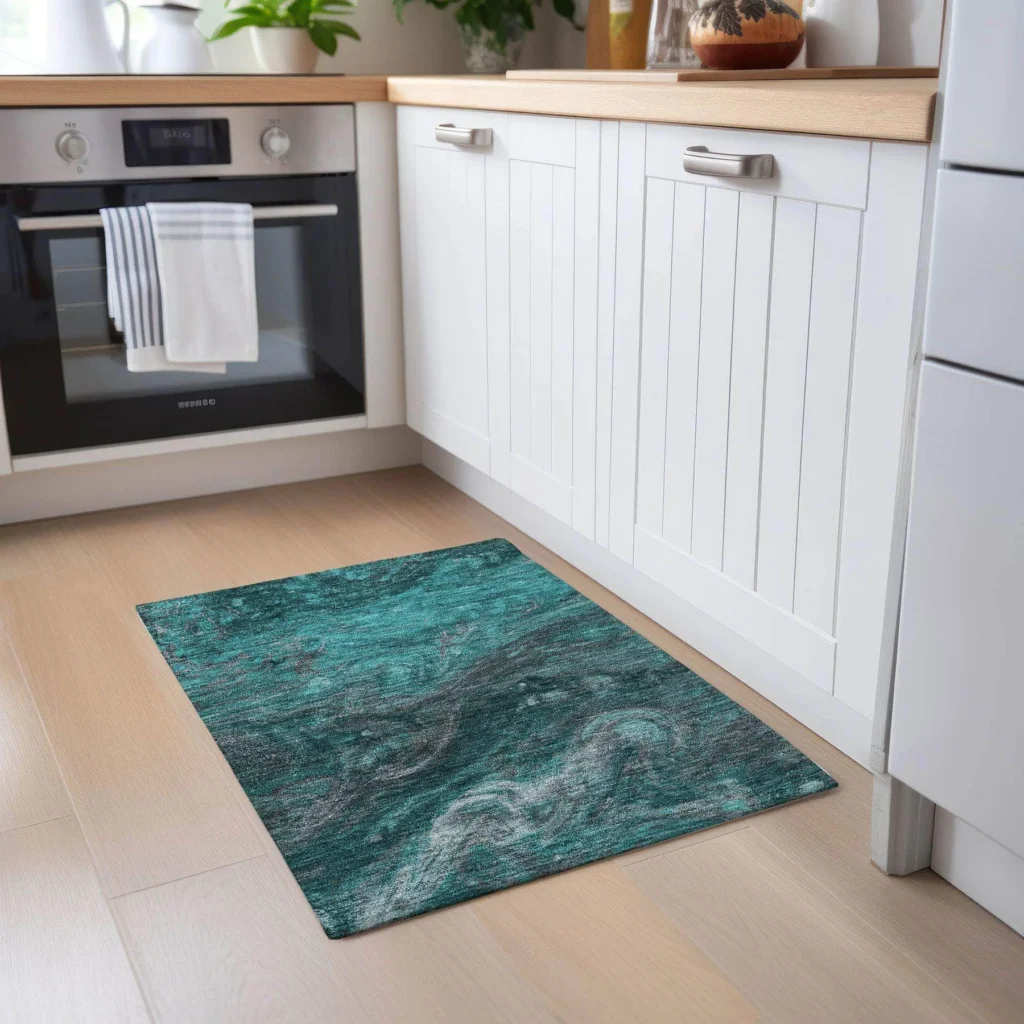
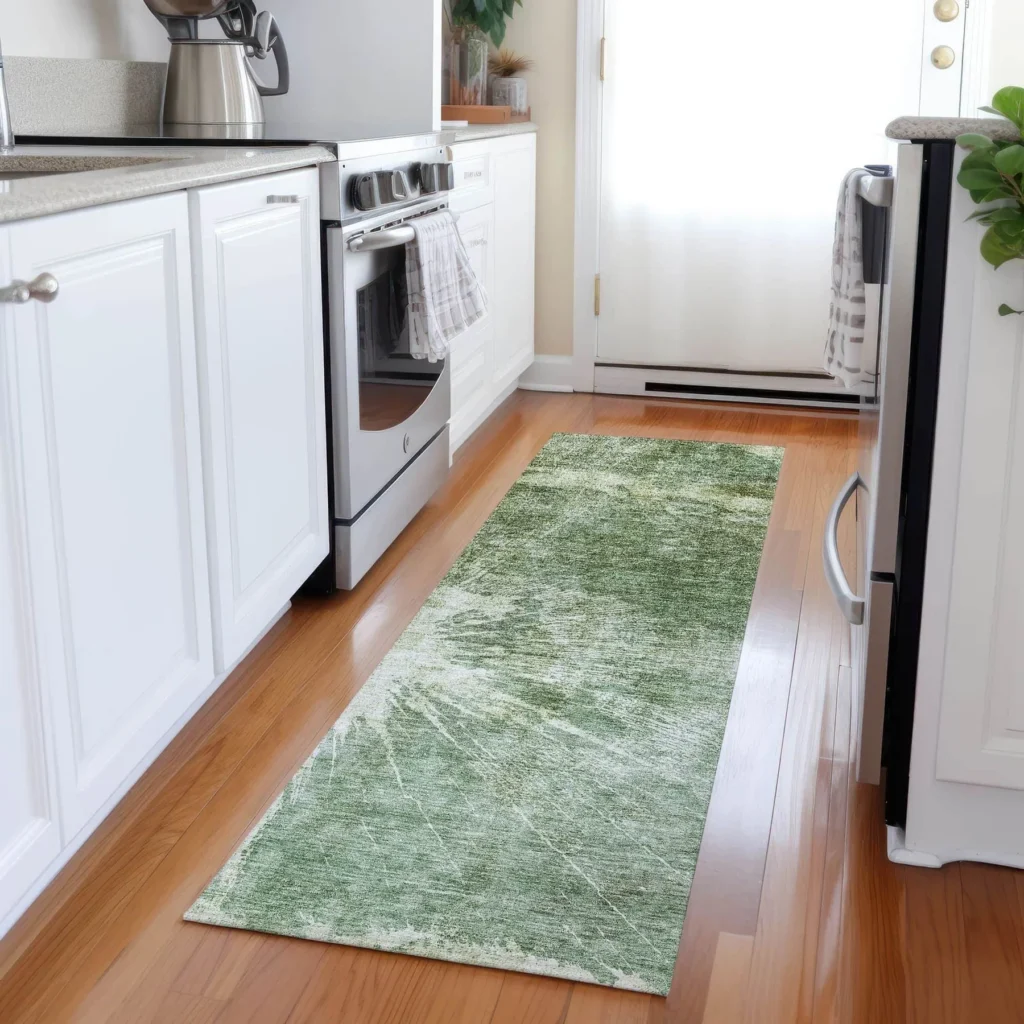
4. A Runner That Fixes the Galley Kitchen
Narrow kitchens and entry halls only look finished with a runner — a rectangle just makes the strip feel more cramped. A washable 2.5×8 runner in a low pile covers the stand-at-the-sink zone and takes a beating. Washable runner 2.5×8 starts around $90. Measure your clear floor width first; a runner wider than your walkway is the most common return in this category.
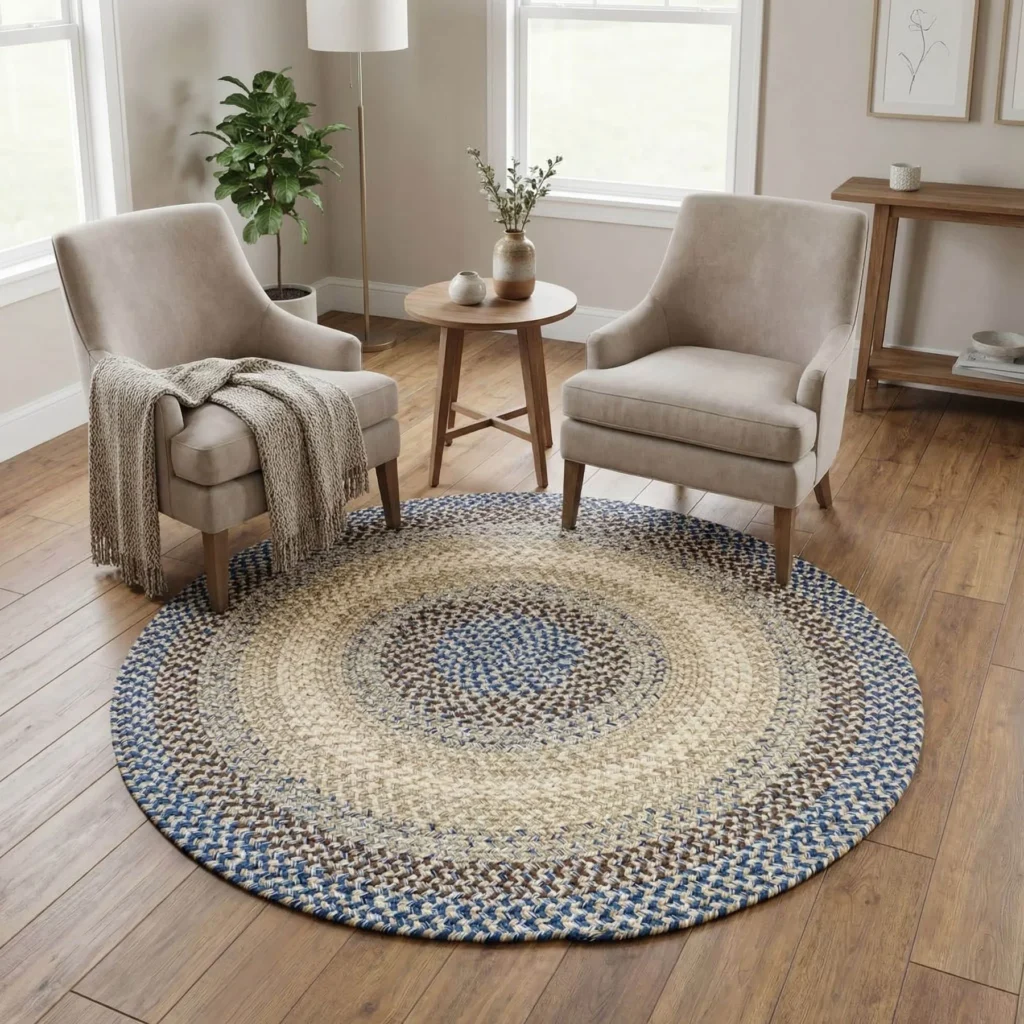
5. A Round Rug for the Corner You Can’t Figure Out
Every studio has one boxy corner that resists a rectangle. A 4-ft round under a reading chair or by the entry breaks the grid and makes the spot look planned. Round rug, 4 ft runs about $130–180. Rounds work best floating — nothing heavy pinning them down. Stick to low-furniture zones, not under a full seating group.
6. A Wool Solid When You Want the Upgrade
If the budget stretches, a low-pile wool solid is the one rug you’ll keep across apartments. Wool is naturally springy, hides footprints, and lasts years. Wool solid low-pile 5×8 sits higher, around $240–350. It’s spot-clean rather than machine-washable, which makes it a better pick for a bedroom or a low-splash living room than a kitchen-adjacent studio floor.
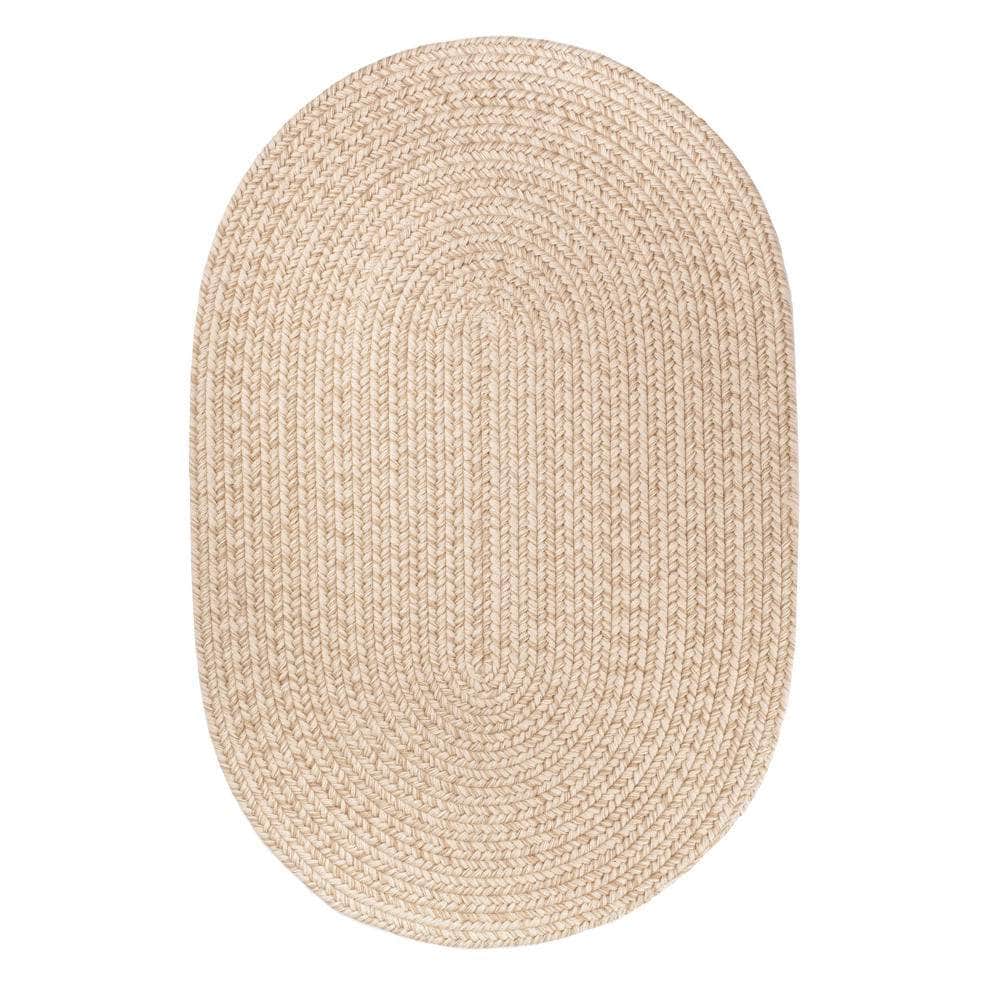
7. A Cream Washable to Brighten a Dark Bedroom
Basement-level windows and north-facing studios eat light. A cream or ivory washable rug bounces what little you get and makes a small bedroom feel airier. Ivory washable 5×8, around $250, extends past a queen so your feet land soft. Because it’s washable, the usual “pale rug is impractical” objection mostly disappears — just keep it out of the entry, where light colors flag every scuff.
8. A Textured Tonal for Interest Without Pattern
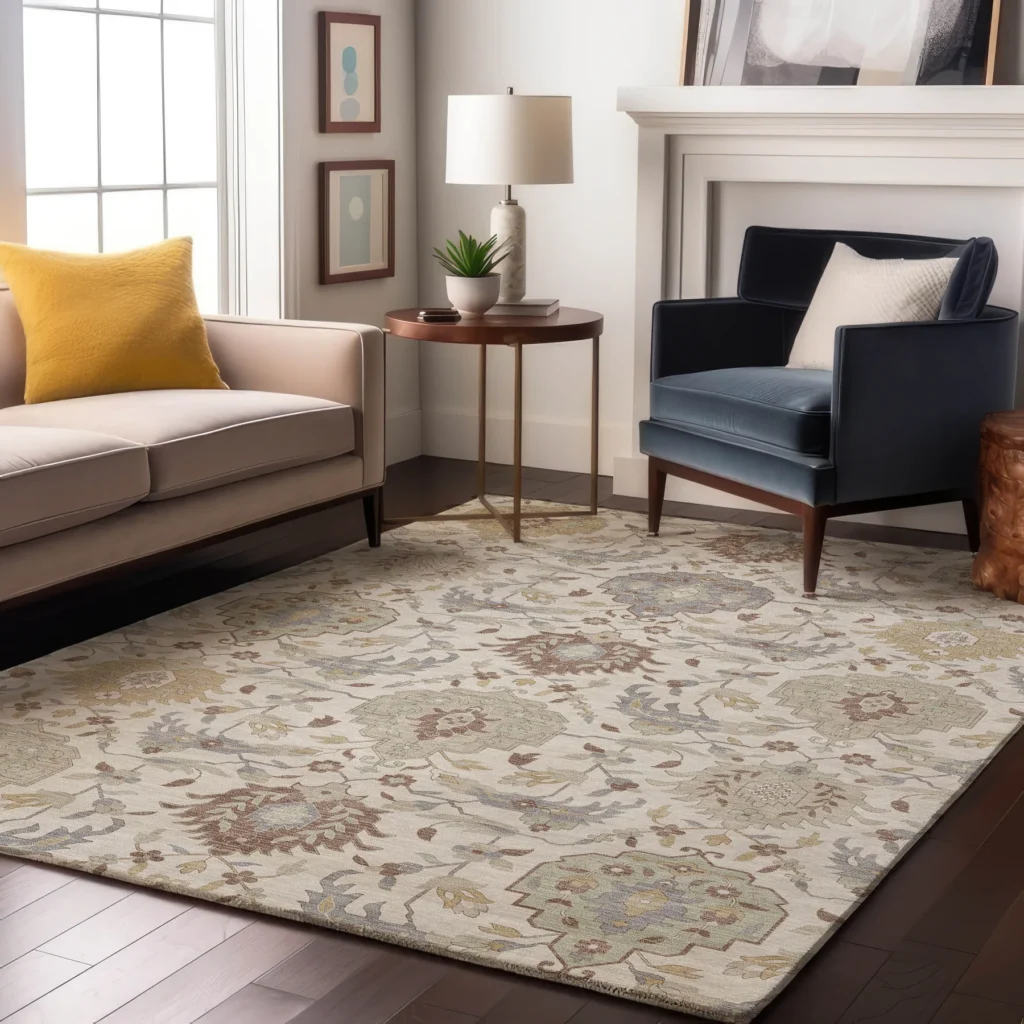
Pattern can shrink a small room; texture doesn’t. A subtle tonal stripe or a carved solid gives the floor something to look at while keeping the palette calm. Transitional Taupe Brown 5×8 runs about $250. Tone-on-tone designs also forgive uneven light; they photograph and live well in a studio where the light shifts across the day.
9. A Low-Pile Synthetic for the Dining-and-Everything Zone
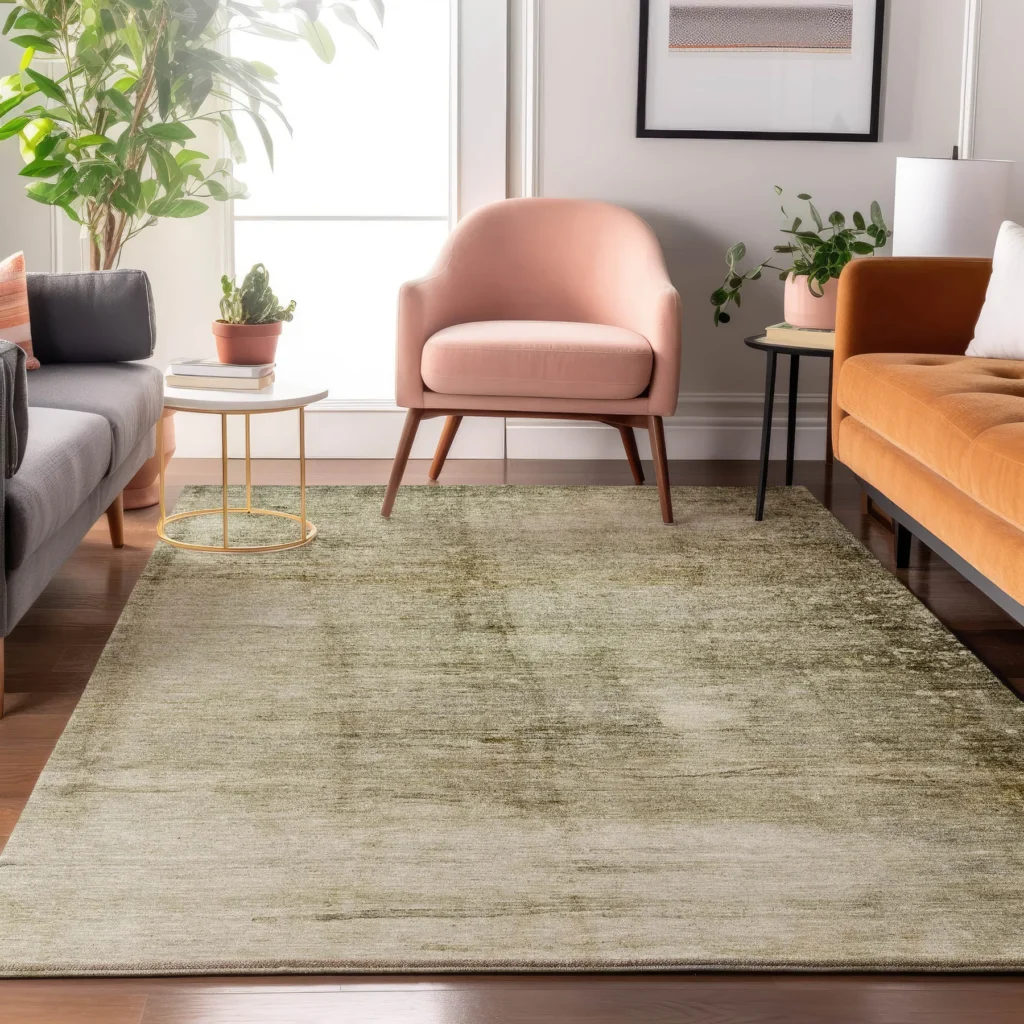
When one rug has to survive a fold-out table, a desk chair, and daily walking, low-pile polypropylene is the workhorse. Low-pile synthetic 5×8, around $150, spot-cleans easily and chairs glide instead of snag. It’s the least soft rug on this list. If you sit on the floor much, throw a plush accent on top.
10. A Small Accent to Finish the Entry
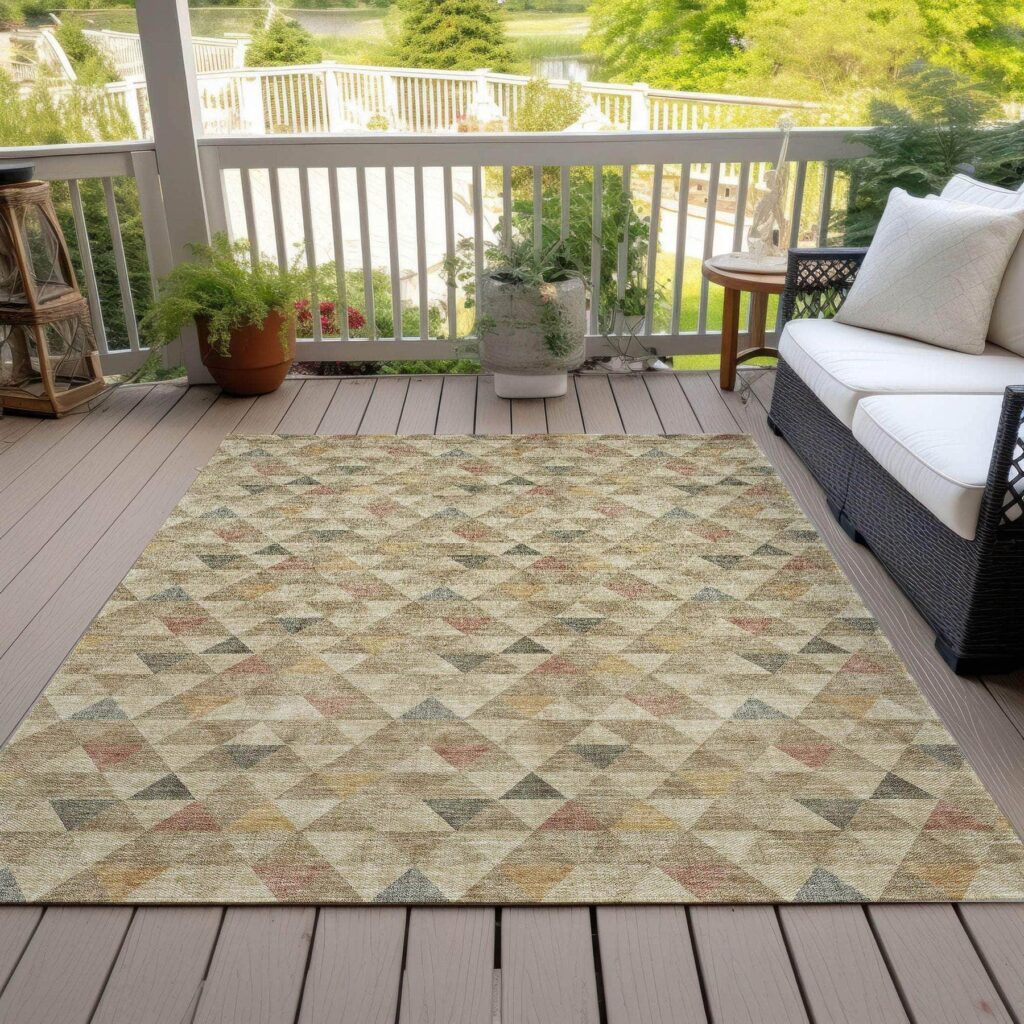
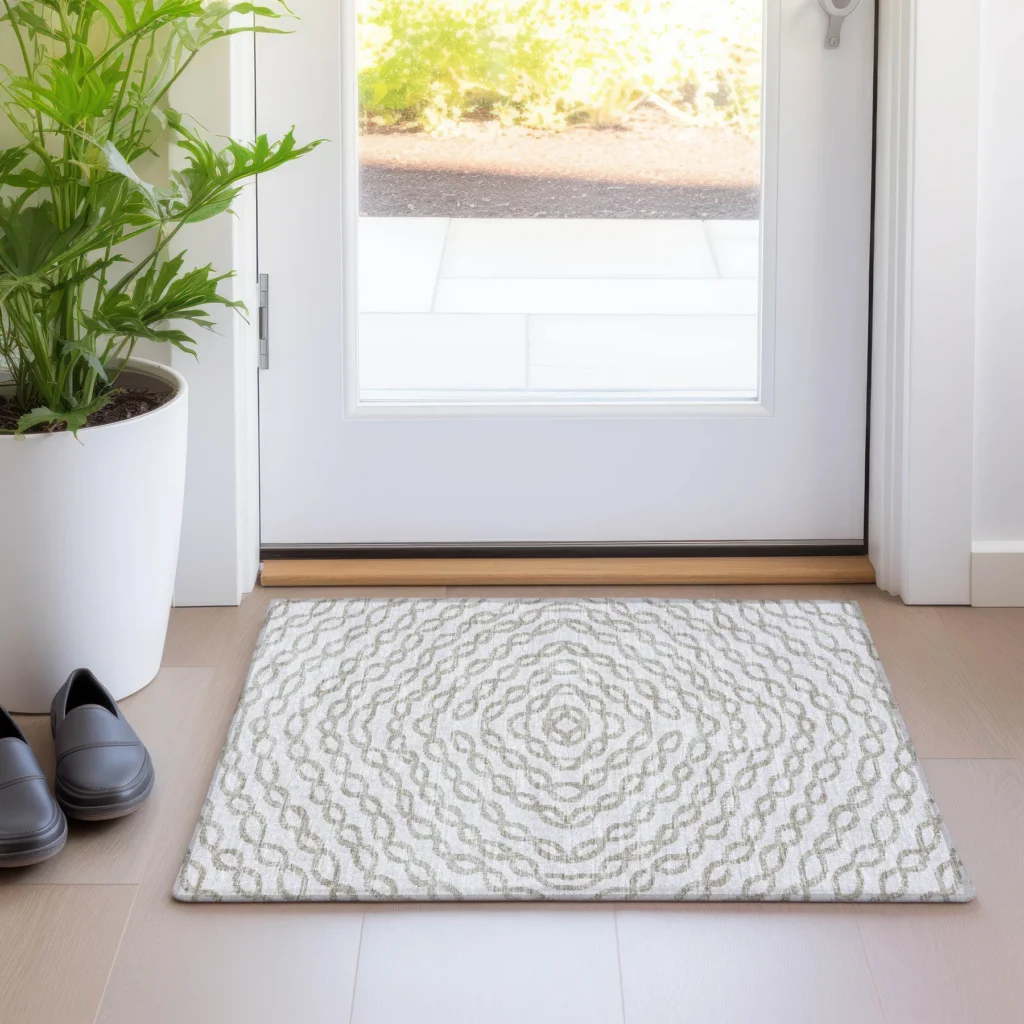
The last 5% of a put-together studio is the tiny stuff — a 2×3 by the door or a 3×5 at the sink. Small accent rug, 2×3 runs around $30–70 and is the cheapest way to make an entry read intentional. Add a thin pad so it doesn’t skate on hard floors and become a trip hazard.
How to Choose: Materials, Pile, and Color for Small Spaces
Material is the decision that outlasts the trend, so match it to how you actually live. Washable polyester and polypropylene are the renter-and-pet defaults: they resist stains, spot-clean fast, and the polyester lines go in the machine. Jute brings texture and a natural warmth but traps crumbs and hates water, so keep it away from food and sinks. Wool is the long-game choice — soft, springy, durable — at a higher price and spot-clean only. One rule with no exceptions: skip viscose (sometimes labeled “art silk”) in any room with food or water. It stains if you look at it wrong and it’s the most-regretted rug purchase there is.
Pile height matters more in a small room than a large one. Low pile keeps doors clearing, chairs gliding, and the floor visually flat, which reads as more space. Save the thick shag for a bedroom where nothing rolls across it.
Color is your space-expanding lever. Light, low-contrast rugs blur the line between floor and rug and make the footprint feel bigger; busy high-contrast patterns chop it up. Stay tonal — greige, oatmeal, bone, soft taupe — and let texture, not pattern, do the work. Finish with a proper rug pad: it stops slipping, adds a little cushion, and makes even a budget rug feel more substantial.
FAQ
What size rug do I need for a studio living room?
Aim for front-legs-on: a 6×9 or 8×10 so the front feet of your sofa and chairs sit on the rug. A 5×7 is too small to anchor a living zone and belongs in a bedroom or under a desk instead.
Can a rug actually make a small room look bigger?
Yes, two ways. A rug large enough to unite your furniture into one group reads as more space than a small floating rug, and a light, low-contrast color blurs the floor-to-rug edge so the footprint feels larger.
Are washable rugs a good idea for a small apartment?
For most renters, they’re the best idea. Machine-washable polyester handles spills, pets, and near-kitchen life in a studio where every surface is close together, and it removes the usual worry about pale colors.
What rug works if my sofa is pushed against the wall?
Pull the rug out from the wall so it extends past the front of the sofa and into the room, with the front legs on it. Sizing the rug to the room rather than tucking it under a wall-hugging sofa keeps the space from feeling boxed in.
Jute or washable for a rental?
Washable if you cook a lot, have pets, or the rug sits near the kitchen. Jute if you want natural texture in a lower-traffic, dry zone and don’t mind a grippy pad and occasional shake-out.